
Most WordPress to Sanity migrations take 4–8 weeks, and WordPress to Contentful 6–10 weeks. The exact timeline is fixed after the free audit, before any work starts.
WordPress migration services
WordPress migration services — move off WordPress without losing a URL.
I move WordPress sites to Sanity or Contentful with a fast Next.js front end. Fixed scope, every old URL redirected, and a live report that shows exactly what moved.
Migration report · acme.com
Live1,240
URLs preserved
412
301 redirects
100%
content preserved
Largest Contentful Paint3.4s→0.7s
Across our last 6 migrations
100%
URLs & redirects preserved
4×
faster LCP on mobile
150+
pages migrated, zero data lost
Where to move
Sanity or Contentful: where should your WordPress site go?
Both are headless CMS platforms: your team edits content in one place, and a fast Next.js site shows it. They suit different teams.
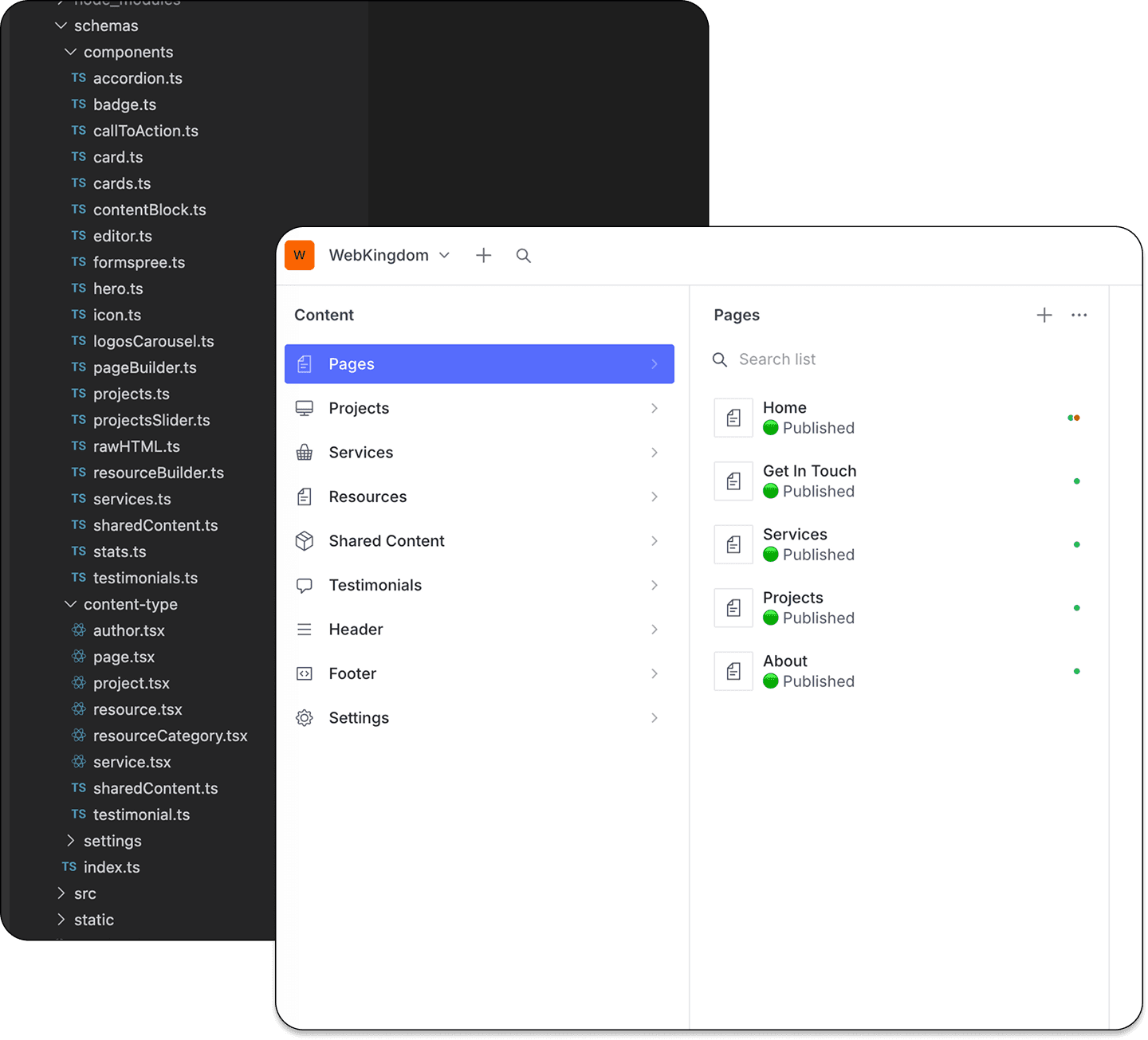
- Sanity: for content-heavy marketing sites. The editing screen, Sanity Studio, is shaped around how your team works, and it is the CMS this site runs on. See WordPress to Sanity migration.
- Contentful: for larger teams with set workflows, content in several languages and detailed role-based access. See WordPress to Contentful migration.
- Staying on WordPress: sometimes the better answer is to tidy up what you have, or run WordPress as a headless CMS behind a Next.js front end. My headless CMS page explains the options.
The free audit ends with an honest recommendation, even if it is the cheaper one.
What moves
Everything WordPress was holding, moved.
Plugins hide a lot of a WordPress site. A migration is only done when all of it comes across: the redirects, the SEO fields, the media, the forms and the tracking.
URLs & 301 redirects
Posts, pages, category and tag archives and old ?p= links mapped and 301-ed, checked against a full crawl.
SEO & structured data
Yoast-style SEO fields, canonicals, Open Graph and schema moved into typed fields, so nothing depends on a plugin.
Media & images
The whole WordPress media library moved with filenames intact, served in modern formats from the new CDN.
Content models
Posts, pages and custom post types become structured content with authors, categories and references.
Integrations
Forms, analytics, tag manager and pixels that lived in plugins, re-wired in the new site.
A fast front end
A Next.js site with no theme or plugin overhead: static by default, fast on mobile.
Zero-downtime process
Your live site never goes dark.
Audit
freeCrawl every URL, redirect & field. Free.
Model
Design typed Sanity models.
Build
Next.js site built in parallel.
QA
Every 301 & vital verified.
Cutover
Flip DNS in a quiet window.
URLs & SEO
What happens to your WordPress URLs and SEO
WordPress creates more addresses than most people realise: posts and pages, but also category and tag archives, author pages, attachment pages, date archives and old ?p= links.
Before anything is built, I crawl them all, check which ones earn traffic or links, and give each one a home on the new site or a 301 redirect to the closest relevant page. Archives that never earned anything are redirected or dropped on purpose, not by accident.
What your SEO plugin stored moves too: titles, descriptions, canonicals, Open Graph images and schema become typed fields in the new CMS.
The redirect map is tested before the DNS switch, and 404s and redirects are watched for 30 days after launch.
Side by side
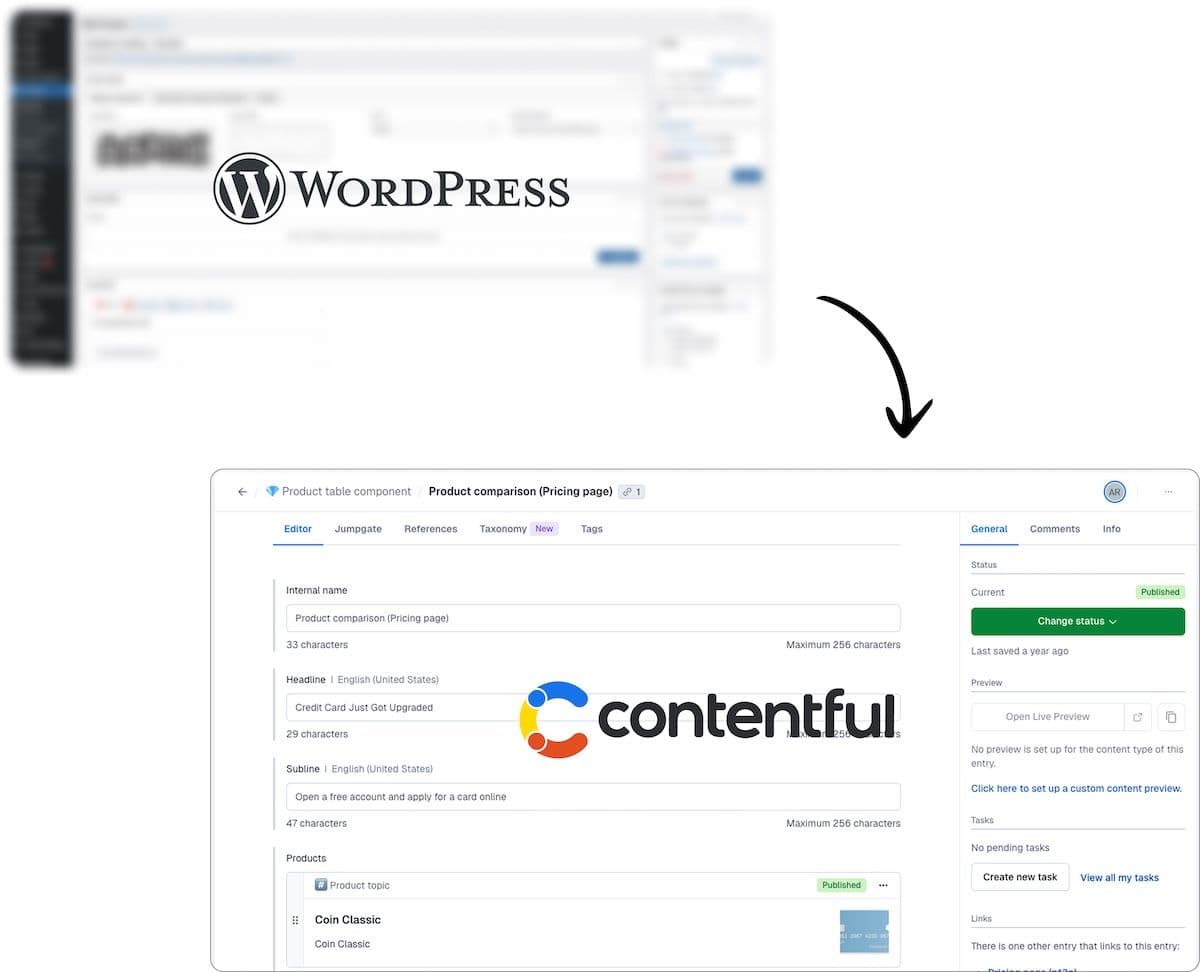
WordPress vs. a headless CMS + Next.js
Capability
WordPress
Sanity or Contentful + Next.js
Plugins
Dozens to update and patch
Features built into the site
Page speed
Slows as themes and plugins stack up
Static pages, fast on mobile
Editing
One editor for every kind of content
Fields shaped around your content, with preview
SEO fields
Stored by a plugin
Typed fields in the CMS
Security
Public database and admin login
No public database or admin to attack
Reusing content
Tied to the theme
Reusable on any site or channel
Fixed-scope pricing
One quote. No hourly surprises.
Every project is quoted fixed-scope after the free audit and paid in three stages (40/40/20). These ranges set expectations going in.
See your site's migration report.
A free audit — URL inventory, redirect plan and fixed-scope quote. Even if you decide to stay on WordPress.
WordPress migration questions
The questions every WordPress team asks before a migration. Honest answers.
Got a question we did not cover? A 30-minute discovery call is the fastest way to a fixed-scope quote.